
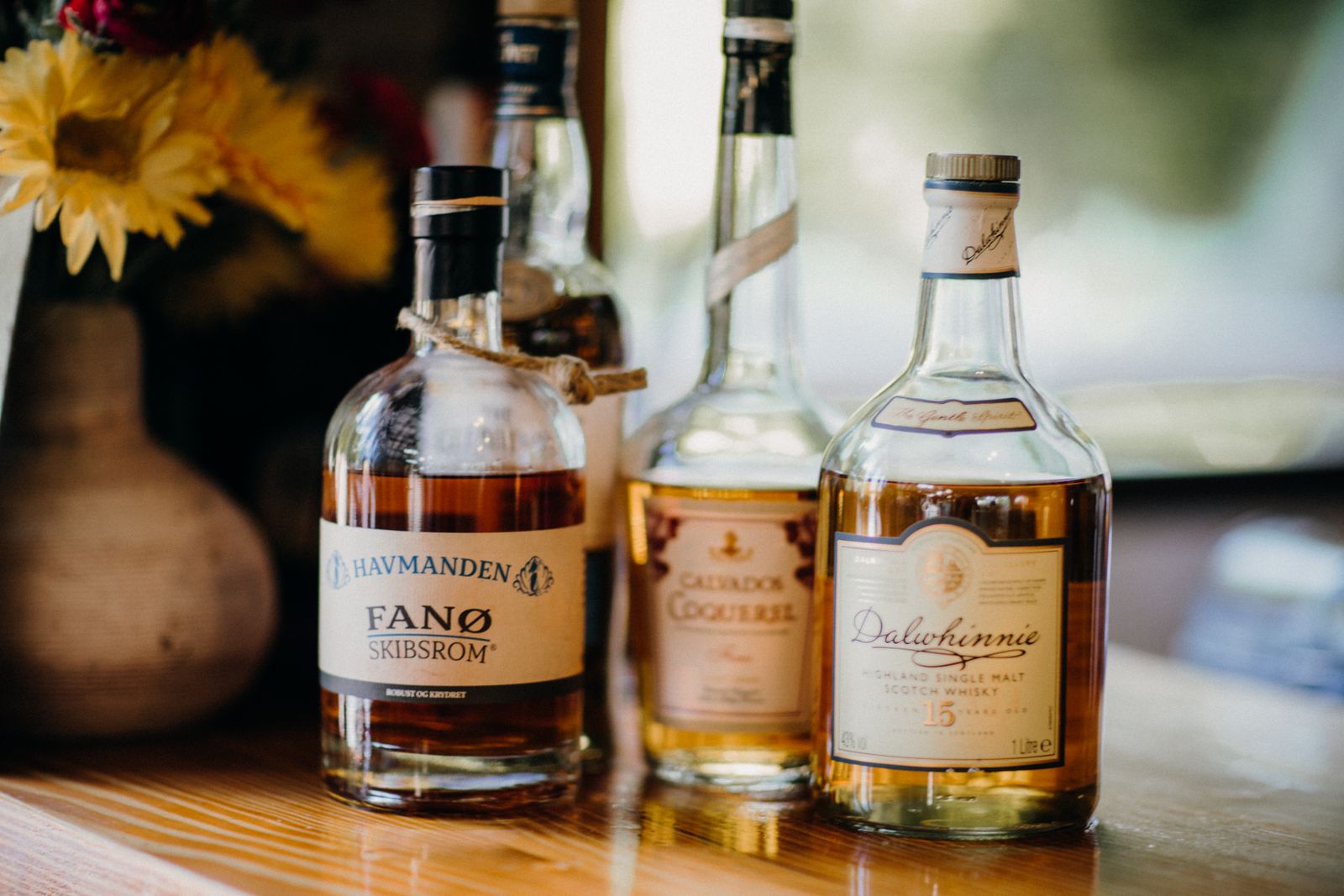
The best alcohol for homemade vanilla extract sits between 70 and 100 proof (35–50% ABV). That range dissolves vanillin and the hundreds of other flavor compounds in a vanilla bean efficiently without killing them. Below 70 proof, water dominates and extraction stalls. Above 100 proof, alcohol dominates and the extract turns harsh. Everything else — which spirit, which brand, what budget — is secondary to staying inside that window.
The Proof Rule: 70–100 (35–50% ABV)
Vanillin, the primary flavor compound in vanilla, is alcohol-soluble. So is the family of supporting compounds — heliotropin, coumarin analogs, and the esters that give each origin its signature character. You need enough alcohol to pull all of them out of the bean and keep them in solution over time.
- Below 35% ABV: Water-heavy. Extraction is slow and incomplete. You’ll get color but thin flavor, and the extract is prone to spoilage.
- 35–50% ABV (70–100 proof): The sweet spot. Strong enough to extract fully, mild enough to let the bean’s complexity come through.
- Above 50% ABV: Works, but the result is often sharper and less nuanced straight out of the bottle.
High-Proof Spirits and the Water-Cut
Everclear (151 proof / 75.5% ABV) and similar high-proof grain spirits are popular because they’re cheap per ounce of alcohol. They work — but you need to dilute before macerating.
The math: To bring 151-proof Everclear down to 80 proof (40% ABV), mix 1 part Everclear with 0.89 parts water. In practical terms: for every 8 oz of Everclear 151, add roughly 7 oz of water. The result is about 15 oz of 80-proof base, ready for your beans.
Use our vanilla extract calculator to dial in your exact bean-to-alcohol ratio once you’ve settled on your proof.
Flavor by Spirit: What Each One Does
Vodka: The Neutral Canvas
Vodka is the default for good reason. An 80-proof well vodka — Smirnoff, Tito’s, Svedka — contributes almost nothing of its own flavor. What you taste is the bean. That makes it the clearest way to showcase the difference between a Madagascar Bourbon bean’s creamy, raisin-and-tobacco complexity and the chocolate-forward depth of a Uganda bean.
Does expensive vodka matter? No. Distilled and filtered to near-neutral, a $12 handle and a $40 bottle behave identically in a 6-month maceration. Spend the savings on better beans. That six-month wait is the traditional route — if you’d rather not wait, here’s how to speed up your extract.
Budget pick: Smirnoff 80 proof Mid-tier pick: Tito’s Handmade Vodka 80 proof (if you want the small-batch feel without paying for it in a way that affects your extract)
Bourbon: Caramel and Oak Warmth
Bourbon adds a genuine flavor contribution — vanilla-adjacent caramel, toasted oak, a little corn sweetness. That’s not a flaw; it’s a feature when used deliberately. Paired with Madagascar Grade B extract beans, bourbon extract develops a deep, layered warmth that’s genuinely remarkable in spice cakes, bread pudding, and custards.
Stay at or near 80 proof. Most standard bourbons land there.
Budget pick: Evan Williams Black Label 86 proof Mid-tier pick: Wild Turkey 81 proof (the extra proof is fine; the corn-forward mash adds body)
Rum: Sweet Spice for Darker Extracts
White rum produces an extract close to vodka in neutrality but with a faint sugarcane sweetness. Dark rum — Plantation, Mount Gay — adds molasses and dried fruit notes. Uganda’s beans, which carry a natural cocoa and dried-cherry character, pair especially well here. The combination reads almost like a baking chocolate with depth.
Avoid flavored rums. You’re adding flavor compounds, not removing them.
Budget pick: Bacardi Superior (white, 80 proof) Mid-tier pick: Mount Gay Eclipse (dark, 80 proof)
Brandy: Fruit Depth and Complexity
Brandy and Cognac-style spirits bring dried grape, apricot, and light oak. The result is a more complex extract that works beautifully in pastry cream and fruit-based desserts. It’s not neutral, so it isn’t right for every application — but bakers who use it rarely go back.
Budget pick: E&J VS Brandy 80 proof Mid-tier pick: Copper & Kings American Brandy 80 proof
The Honest Takeaway: Beans Matter More Than the Bottle
Amadeus has been sourcing vanilla since 1994, and Cassie and Marty will tell you the same thing that has always been true: the spirit is the vehicle. The bean is the destination.
Grade B extract beans — sometimes called extract-grade — are drier and lower in moisture than Grade A baking beans. That lower moisture means higher vanillin concentration per ounce, which means more flavor per dollar. They’re not cosmetically perfect, which is exactly why they’re priced for extract-making.
For the complete method — ratios, timing, when to strain — see our full guide to making vanilla extract.
FAQ
What proof is best for vanilla extract? 80 proof (40% ABV) is the practical standard. It’s the most widely available, sits in the middle of the extraction sweet spot, and produces consistent results with any spirit.
What’s the cheapest alcohol that works? A 1.75L bottle of 80-proof well vodka — Smirnoff, McCormick, Fleischmann’s — works perfectly. Or dilute Everclear 151 as described above for the lowest cost per ounce of alcohol.
Can you use rum for vanilla extract? Absolutely. White rum produces a nearly neutral extract. Dark rum adds molasses warmth. Both work within the 70–100 proof range.
Does expensive vodka make better extract? No. Premium vodkas are filtered for smoothness in a cocktail glass, where subtleties matter. In a 6-month cold maceration with vanilla beans, those differences disappear entirely. Put the budget into extract-grade beans instead.
Amadeus has been importing vanilla directly from family farms and co-operatives since 1994. Browse our extract-grade vanilla beans — sourced from Madagascar, Uganda, Mexico, Indonesia, Comoros, and Tanzania — and make the best extract of your life.