
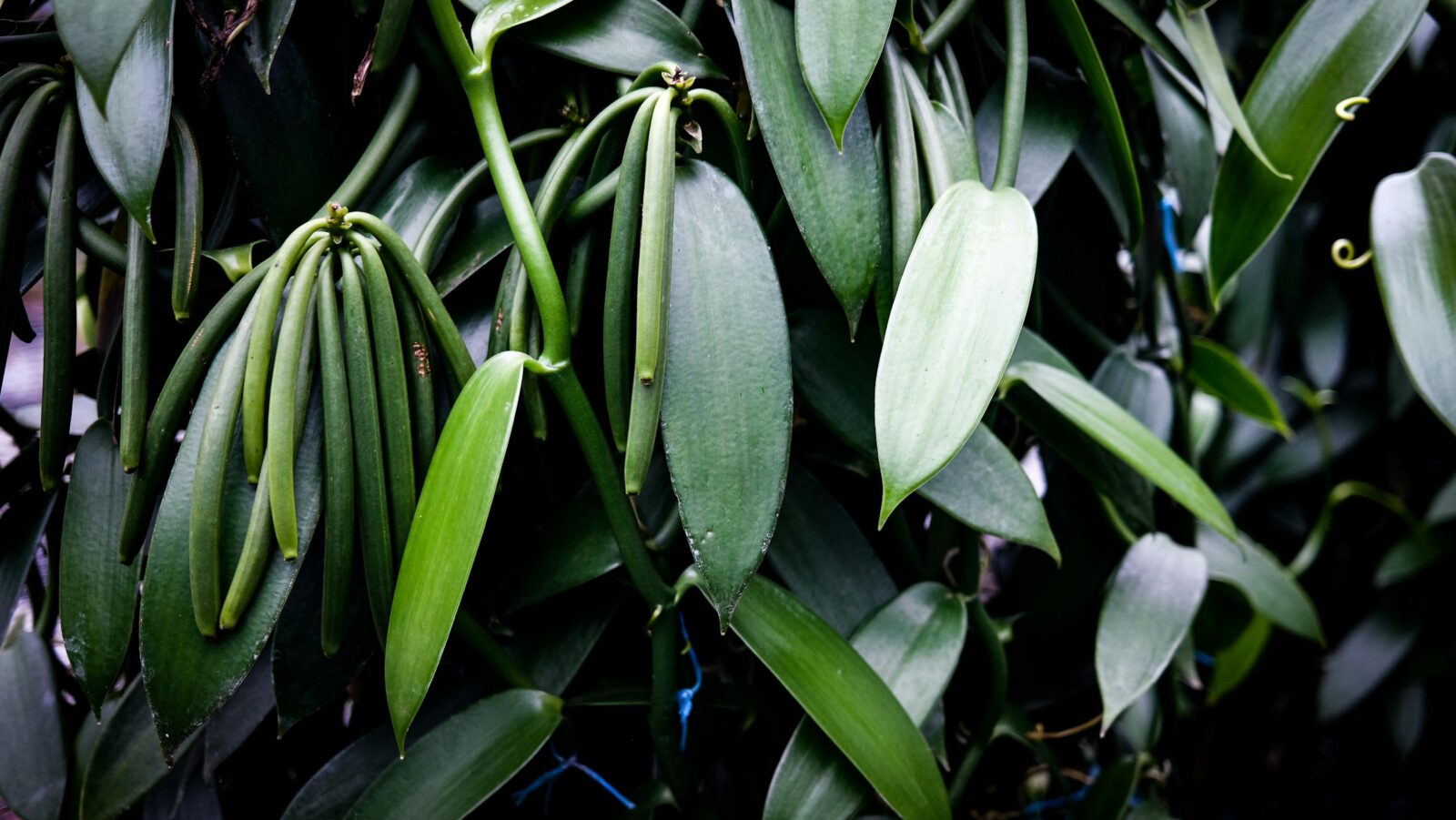
Yes, you can grow Vanilla planifolia as a houseplant. Actually harvesting cured vanilla beans from it is a different matter — one that requires 3–5 years of careful cultivation, hand-pollination on a single-day deadline, nine months of pod development, and weeks of professional curing. Most home growers never make it past the flower stage. That’s not a discouragement; it’s just the honest picture before you commit a corner of your home to a tropical climbing orchid.
What the Plant Actually Needs
Vanilla planifolia is a vining orchid native to Mexico. It grows in humid, shaded forest margins — and it expects you to recreate that environment indoors.
Temperature: 65–85°F (18–29°C), steady. Cold drafts or a dry heating vent nearby will stall growth.
Humidity: 80% or higher. Most homes sit around 30–50%. You’ll need a humidifier, a pebble tray with water, or a greenhouse cabinet to get close.
Light: Bright but indirect — dappled, like light filtered through a forest canopy. A south- or east-facing window with a sheer curtain works. Direct afternoon sun scorches the leaves.
Something to climb: In the wild, vanilla vines reach 30–50 feet up host trees. In your home, provide a trellis, moss pole, or sturdy stake. The aerial roots need to grip something.
Watering and soil: Fast-draining orchid mix, not standard potting soil. Water when the top inch dries out; soggy roots rot quickly.
Get all of that right consistently for three to five years, and your plant may finally flower. May.
The One-Day Window
This is where home vanilla growing gets genuinely hard.
Each vanilla flower opens for approximately one day — sometimes less. In its native Mexico, Melipona bees handle pollination. Outside Mexico, no natural pollinator does this work. Every vanilla farm in Madagascar, Uganda, Indonesia, or Tahiti hand-pollinates each flower individually, on the morning it opens, using a small stick or toothpick to transfer pollen from the anther to the stigma.
Miss the window, or miss a flower entirely, and that bloom drops off without setting a pod. On a commercial farm in Madagascar’s SAVA region — one of the origins Amadeus has sourced from since 1994 — a skilled worker might hand-pollinate hundreds of flowers in a single morning during peak bloom season. At home, you’ll have a handful of flowers and one shot per bloom.
If pollination succeeds, the pod takes roughly nine months to reach harvest size. You’ll watch a thin green finger grow slowly to 15–20 cm. That green pod, picked right off the vine, smells almost like nothing — faintly grassy at best.
Why Curing Is Where Everything Happens
All the flavor you associate with vanilla — the warm, creamy, complex aroma — develops during curing, not on the vine. Traditional curing in Madagascar takes six to eight weeks and involves blanching, sweating, slow-drying, and conditioning the pods to coax out vanillin and the dozens of other flavor compounds that make a great bean great.
This is the step home growers genuinely cannot replicate in a kitchen or spare room. It requires precise temperature management, controlled airflow, and experience reading the beans as they transform. Green pods skipped past a proper cure produce flat, harsh flavor — if any flavor at all. This hands-on labor across thousands of pods per harvest is also the honest answer to why real vanilla costs what it costs. Our vanilla FAQ covers more on this if you’re curious about the full supply chain.
Frequently Asked Questions
How long until a vanilla plant produces beans?
Three to five years from a healthy cutting before you’ll see flowers, assuming ideal growing conditions throughout. From successful pollination to harvestable pod is another nine months. Plan for a multi-year project.
Can you grow vanilla from a store-bought bean?
No. Cured vanilla beans are fully dried and processed — the seeds inside are not viable. You need a live cutting from an established Vanilla planifolia plant, available from specialty orchid nurseries.
Why is vanilla so expensive?
Every pod is hand-pollinated on a one-day window, grown for nine months, and then cured for weeks by skilled workers. There is no shortcut in that chain. When you buy Grade A cured beans from a direct-import source, you’re paying for years of human labor on a single crop cycle.
Grow the Plant, Buy the Beans
Vanilla planifolia makes a genuinely beautiful houseplant — dark glossy leaves, an elegant climbing habit, and the occasional creamy-yellow flower. Grow one for the joy of it. Learn the plant. Attempt the hand-pollination just to feel what farmers in Madagascar and Uganda do thousands of times each season.
But for your baking, your extracts, and your pastry work, start with properly cured beans. If you’re not sure which origin suits what you’re making, our origin guide walks through the flavor differences between Madagascar Bourbon, Mexican, Ugandan, and Indonesian beans so you can choose with confidence.
The plant is the project. The beans are the ingredient.
Amadeus has been importing vanilla directly from family farms and co-operatives since 1994. Browse our cured Grade A vanilla beans sourced from Madagascar, Mexico, Uganda, Indonesia, and beyond.