
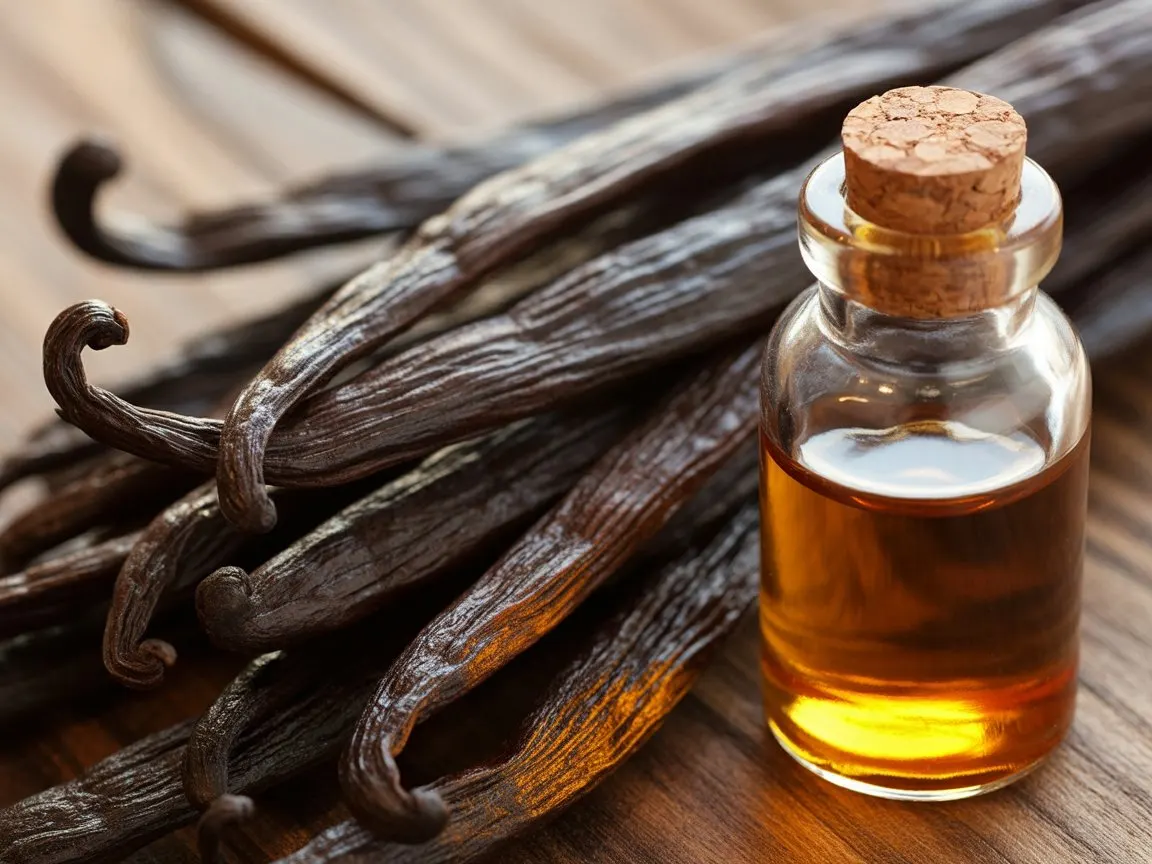
Grade A and Grade B vanilla beans come from the same plant and the same farms — moisture content is what separates them. Grade A beans run 25–35% moisture: plump, oily, and built for scraping into custards and ice cream. Grade B beans run 15–25% moisture: drier, more concentrated in vanillin per ounce, and the smarter buy for making extract. Knowing which to reach for saves you money and gets you better results. For a deeper look at origins, grades, and what to look for when shopping, see our guide on buying vanilla beans.
Moisture Is the Whole Story
Both grades start in the same vanilla orchid flowers, hand-pollinated by farm workers in Madagascar, Mexico, Uganda, and our other sourcing regions. What creates the grade distinction is how long and how carefully the beans are cured after harvest — and how much moisture remains in the finished bean. Learn more about our sourcing and all four SKUs on our Madagascar vanilla beans page.
Grade A beans, sometimes called gourmet beans, are cured to retain higher moisture (25–35%). You can feel the difference the moment you hold one: the bean is supple and almost waxy, it bends without cracking, and the exterior glistens with vanillin crystals if you look closely. Split one open and you’ll find a thick paste of seeds — what pastry cooks call the “caviar” — with a rich, full aroma that fills the room.
Grade B beans, also called extract-grade beans, lose more moisture during curing and finish at 15–25%. They’re thinner, drier, and sometimes slightly brittle. They look less impressive. But here’s what matters: less water per ounce means more vanillin per ounce. When you’re infusing beans into alcohol or another liquid over weeks, that concentration works in your favor. If you’re impatient for that first bottle, here’s how to speed up your extract.
When to Use Grade A Gourmet Beans
Reach for Grade A beans when the bean itself is a visible, sensory part of the finished dish.
- Vanilla ice cream and custards. Split and scrape the seeds directly into your cream. Those flecks of vanilla caviar signal real vanilla to anyone eating the dessert, and the moist flesh releases aroma compounds immediately into the warm base.
- Pastry creams, panna cotta, crème brûlée. Same logic — the bean goes into warm liquid, infuses quickly, and the seeds stay visible in the finished texture.
- Butter-based doughs and frostings. Scraping a Grade A bean into browned butter or into a buttercream gives you a punch of fragrance that dried beans simply can’t match at that stage.
- Sugar infusion. Nestle a spent Grade A pod into a jar of granulated sugar. The residual moisture helps the vanilla oil coat the sugar crystals evenly over a week or two.
Our Madagascar Grade A gourmet beans run 17 cm+, about 7 inches, and are plump enough that one bean reliably seeds an entire quart of ice cream base.
When to Use Grade B Extract-Grade Beans
For any infusion that runs longer than a few days — vanilla extract, vanilla paste, vanilla-infused spirits, or homemade vanilla syrup — Grade B beans are the right tool. If you’re making homemade vanilla extract, visit our extract maker guide for bean recommendations and ratios.
The math is simple. You’re submerging beans in liquid for weeks or months. The alcohol (or water, or glycerin) does the extraction work. High moisture content in the bean doesn’t help you here; it slightly dilutes your solvent and gives you less vanillin mass to extract per dollar spent. A drier bean gives the alcohol more to work with.
Our extract-grade beans are sourced directly from the same family farms and co-operatives that supply our gourmet line — Madagascar Bourbon, Mexican, Ugandan, and others. They just came off the curing mats at a lower final moisture. The vanillin is all there. The flavor compounds are all there. You’re not buying an inferior product; you’re buying the right product for the job.
For ratios, technique, and a full walkthrough of the process, see our how to make vanilla extract guide. The short version: use 1 oz of Grade B beans (about 5 to 7 beans) per cup of 80-proof vodka, chop or split the beans to expose the interior, and give it at least 6 weeks before you judge the result. Avoid anything below 70-proof; it won’t extract properly and can spoil.
The Price Difference Makes Sense
Grade A beans cost more. That’s not marketing — it’s the curing labor. Keeping beans at higher moisture requires more careful monitoring through the curing cycle, more hands-on time, and more losses to beans that don’t make the cut. Cassie and Marty have been buying directly from farms since 1994, and the price difference between grades has always reflected real labor, not arbitrary branding.
If you’re making a gallon of extract, spending Grade A prices for beans you’re going to chop up and submerge in vodka for three months is waste. Buy Grade B, use a proper ratio, and your extract will be richer than anything on a grocery store shelf.
If you’re making crème brûlée for a dinner party and those black vanilla seeds in the custard matter to you — and they should — that’s what Grade A is for.
A Quick Reference
| Grade A (Gourmet) | Grade B (Extract-Grade) | |
|---|---|---|
| Moisture content | 25–35% | 15–25% |
| Appearance | Plump, oily, pliable | Thinner, drier, firm |
| Vanillin per ounce | Lower (more water weight) | Higher |
| Best use | Baking, scraping, sugar infusion | Extract, infusions, brewing |
| Price | Higher | Lower |
Both grades, every origin we carry, are hand-pollinated and hand-cured by the farmers we’ve worked with for decades. The grade tells you about moisture. It doesn’t tell you about quality of sourcing — and that’s where we spend our energy.
Cassie and Marty have been importing vanilla directly from family farms and co-operatives since 1994. Browse our Grade A gourmet beans or our extract-grade beans to find the right bean for your next project.
What is Grade A vanilla?
Grade A (gourmet) vanilla beans are plump, moist beans with 25–35% moisture content. They have a supple texture, oily sheen, and full flexible pods. They are best used split and scraped directly into food.
What is Grade B vanilla?
Grade B (extract-grade) vanilla beans are drier than Grade A, with 15-25% moisture content. They are thinner and less visually appealing, but have a higher vanillin concentration per ounce — which makes them more efficient and economical for extract making.
Which grade is better for making vanilla extract?
Grade B beans are better for extract making. Lower moisture means more vanillin per ounce and better alcohol penetration. If you use Grade A for extract, increase the amount by about 20% to compensate for the higher moisture content.
Which grade is better for cooking and baking?
Grade A beans are better when splitting and scraping the bean directly into a recipe — custards, ice cream, pastry cream, creme brulee, bread dough. The higher moisture and oil content gives immediate flavor impact and visible specks without any infusion time.
Is Grade A more expensive than Grade B?
Generally yes. Grade A beans command a premium because of their appearance and moisture content. For extract making, Grade B is a better value — lower price per ounce and higher vanillin yield per dollar spent.