
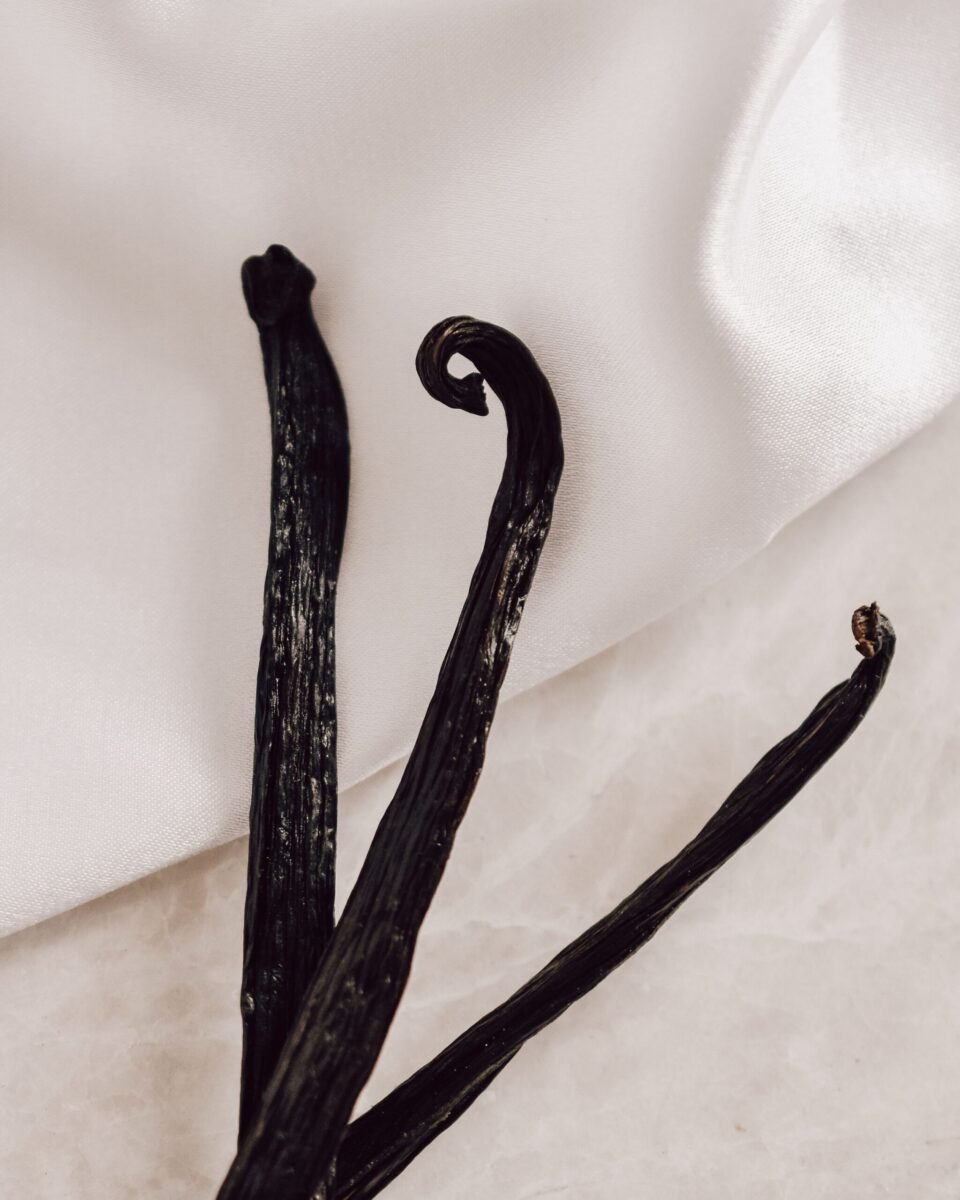
Vanilla bean splits are pods that cracked open naturally during ripening or curing on the vine. The split is cosmetic — the flavor, vanillin content, and moisture are unaffected. Splits often come from beans that ripened longer before harvest, which means vanillin levels can actually run higher than in some intact pods. For most home bakers and extract makers, splits are simply the smarter purchase.
Why Vanilla Beans Split
Vanilla pods grow as long, slender capsules on Vanilla planifolia vines. Farmers hand-pollinate each flower and then wait roughly nine months before harvest. During that time — and especially during the slow, labor-intensive curing process — beans that ripened fully or experienced slight temperature swings can develop a lengthwise crack along the pod wall.
No quality step was skipped. The bean just opened up on its own. On our Madagascar farms, splits appear in every harvest batch alongside intact beans. We sort them out not because they’re inferior, but because the vanilla market grades on appearance, and some buyers need visually perfect pods.
If you want to understand how grading works across the full spectrum, our Grade A vs. Grade B vanilla beans guide breaks down the criteria in detail.
When Splits Are the Right Choice
Extract Making
Splits are ideal for homemade extract — full stop. When you make extract, the first thing you do is split the beans lengthwise to expose the seeds and inner pod wall to alcohol. A bean that already split on the vine is simply one step ahead of you. The alcohol reaches the vanillin-rich interior just as effectively, and the end result is indistinguishable from extract made with intact beans. And if you’re making extract and want to cut the wait, here’s how to speed up the process.
Our complete guide to making vanilla extract walks through ratios, alcohol choice, and timing — and splits are specifically what we recommend there for anyone watching their budget without wanting to sacrifice quality.
Infusions, Syrups, and Sauces
Anywhere you steep a bean in liquid — simple syrup, cream, custard base, hot sauce, honey — a split works perfectly. The opening in the pod actually allows flavor to diffuse slightly faster. Nobody examining your crème brûlée will inspect the pod you steeped in the cream.
Brewing and Distilling
Homebrewers adding vanilla to stouts, porters, or meads, and distillers infusing spirits, consistently use splits. The visual grade of the bean is irrelevant once it goes into a fermenter or still.
When to Buy Whole Grade A Beans Instead
Choose intact Grade A beans when appearance is part of the product:
- Gift presentation — a jar of whole, glossy, 17 cm+ Madagascar Bourbon beans makes an impression
- Split-and-scrape recipes where the whole pod sits visibly in a dish or bottle
- Vanilla sugar made in a clear jar for gifting
- Any recipe where the whole pod is presented to guests
For everyday baking and cooking where the pod gets used and discarded, splits perform identically.
The Price Advantage
Splits typically cost noticeably less per bean than Grade A whole pods — sometimes 20–40% less depending on the harvest. Since vanillin content and moisture are comparable, the savings are real without any trade-off in flavor. For extract makers going through beans in volume, that difference adds up quickly.
Cassie and Marty have sourced Madagascar red splits directly from co-operatives for years specifically because the value-to-quality ratio is hard to beat. You can browse current availability in our extract-grade and splits category.
FAQ: Vanilla Bean Splits
Are vanilla bean splits lower quality? No. Splits are graded separately from Grade A beans because of their appearance, not their flavor or chemistry. The vanillin content, moisture level, and aroma are comparable — and splits from fully ripened pods can test higher in vanillin than some intact beans.
Do splits have less flavor than whole beans? No. Flavor comes from vanillin and the roughly 200+ aromatic compounds in the bean, none of which escape because the pod cracked. A split stored properly in an airtight container retains its full aroma.
Are splits good for making vanilla extract? Splits are the best choice for extract. You split the beans before adding them to alcohol anyway, so a bean that arrived pre-split saves you a step. The extraction is equally thorough, and the finished extract tastes exactly the same.
Cassie and Marty have been importing vanilla directly from family farms and co-operatives since 1994. Browse our current extract-grade beans and splits — sourced from Madagascar, Uganda, Indonesia, and beyond.