
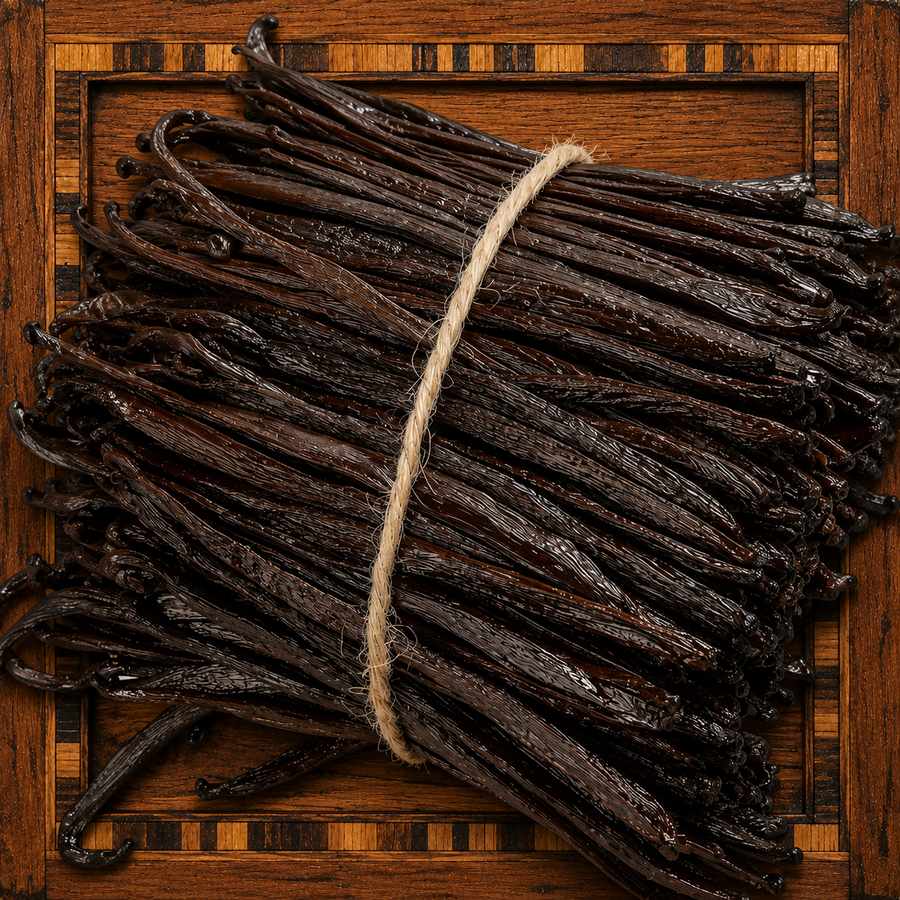
The two most beloved vanilla origins in North America are Madagascar and Mexico — and the debate between them is one every serious baker eventually encounters. Here’s the definitive comparison from Amadeus Vanilla Beans, where we’ve sourced both for over 30 years. For a deeper look at origins, grades, and what to look for when shopping, see our guide on buying vanilla beans. Learn more about our sourcing and all four SKUs on our Madagascar vanilla beans page.
The Short Answer
Neither is universally “better.” They’re different — fundamentally different flavor profiles suited to different applications. Once you understand what makes each unique, you’ll want both in your pantry.
Madagascar Bourbon Vanilla Beans
Origin: Sava Region, northeast Madagascar — the source of approximately 80% of the world’s vanilla supply.
Flavor Profile: Classic, creamy, sweet, and rich. Notes of chocolate, caramel, and deep floral sweetness. This is the vanilla flavor most North Americans grew up with — it’s the reference point for “vanilla” flavor worldwide.
Vanilla species: Vanilla planifolia — the same species as Mexican vanilla, but the terroir, curing process, and climate create a distinctly different final product.
Best Uses for Madagascar Vanilla:
- Vanilla ice cream, custards, and crème brûlée
- Classic vanilla cakes and buttercream
- Cheesecakes and New York-style desserts
- Standard homemade vanilla extract
- Any recipe where “vanilla flavor” is the star
Mexican Vanilla Beans
Origin: Papantla, Veracruz, Mexico — the birthplace of vanilla, where the Totonac people first cultivated it for centuries before Spanish explorers brought it to Europe. If you’re making homemade vanilla extract, visit our extract maker guide for bean recommendations and ratios.
Flavor Profile: Creamy and smooth like Madagascar, but with a distinctive woody, spicy character — notes of clove, cinnamon, and nutmeg layered underneath the vanilla sweetness. Less sweet than Bourbon Madagascar, more complex and earthy.
Best Uses for Mexican Vanilla:
- Chocolate-based desserts — especially Mexican hot chocolate
- Spiced cookies, snickerdoodles, and churros
- Horchata and aguas frescas
- Mole sauces and savory vanilla applications
- Extracts for bakers who want a more complex, spiced profile
- Coffee drinks — pairs beautifully with dark roast
Side-by-Side Comparison
| Madagascar Bourbon | Mexican Planifolia | |
|---|---|---|
| Flavor | Sweet, creamy, rich | Woody, spicy, complex |
| Aroma | Deep floral, chocolate | Earthy, clove, cinnamon |
| Sweetness | Higher | Moderate |
| Best for | Classic desserts, ice cream | Chocolate, spiced recipes |
| Extract | Classic, crowd-pleasing | Complex, distinctive |
| Price | Premium | Premium (hand-pollinated) |
Why Is Mexican Vanilla More Expensive?
Authentic Grade A Mexican vanilla beans — the kind we source at Amadeus — are hand-pollinated by skilled Totonac farmers in Papantla, Veracruz. The vanilla orchid has only one natural pollinator in its native range (the Melipona bee), so every pod must be hand-pollinated within a few hours of the flower opening. This painstaking labor is reflected in the price.
Cheap “Mexican vanilla” sold in tourist shops or import stores is often made with synthetic vanillin or, worse, coumarin — a substance banned by the FDA. Our Mexican vanilla beans are 100% authentic, hand-harvested Grade A pods from family farms.
Which Should You Choose?
- First-time vanilla bean buyer? Start with Madagascar. It’s the classic for a reason.
- Making chocolate desserts or spiced recipes? Try Mexican. The flavor complexity is extraordinary.
- Making vanilla extract? We recommend blending both — 70% Madagascar, 30% Mexican — for a complex, well-rounded extract with depth.
- Want to explore different flavor profiles? Buy both and compare side-by-side. It’s one of the best vanilla education experiments you can do.
Shop Madagascar and Mexican Vanilla Beans
Both origins are in stock now at Amadeus Vanilla Beans — sourced directly from grower co-operatives, fresh from the current harvest:
Questions? We’ve been in vanilla since 1994. Contact us — we’re always happy to help you find the right vanilla for your recipe.
If you also want to compare Tahitian vanilla with Bourbon, see our three-way guide: Madagascar vs. Mexican vs. Tahitian Vanilla Beans.