
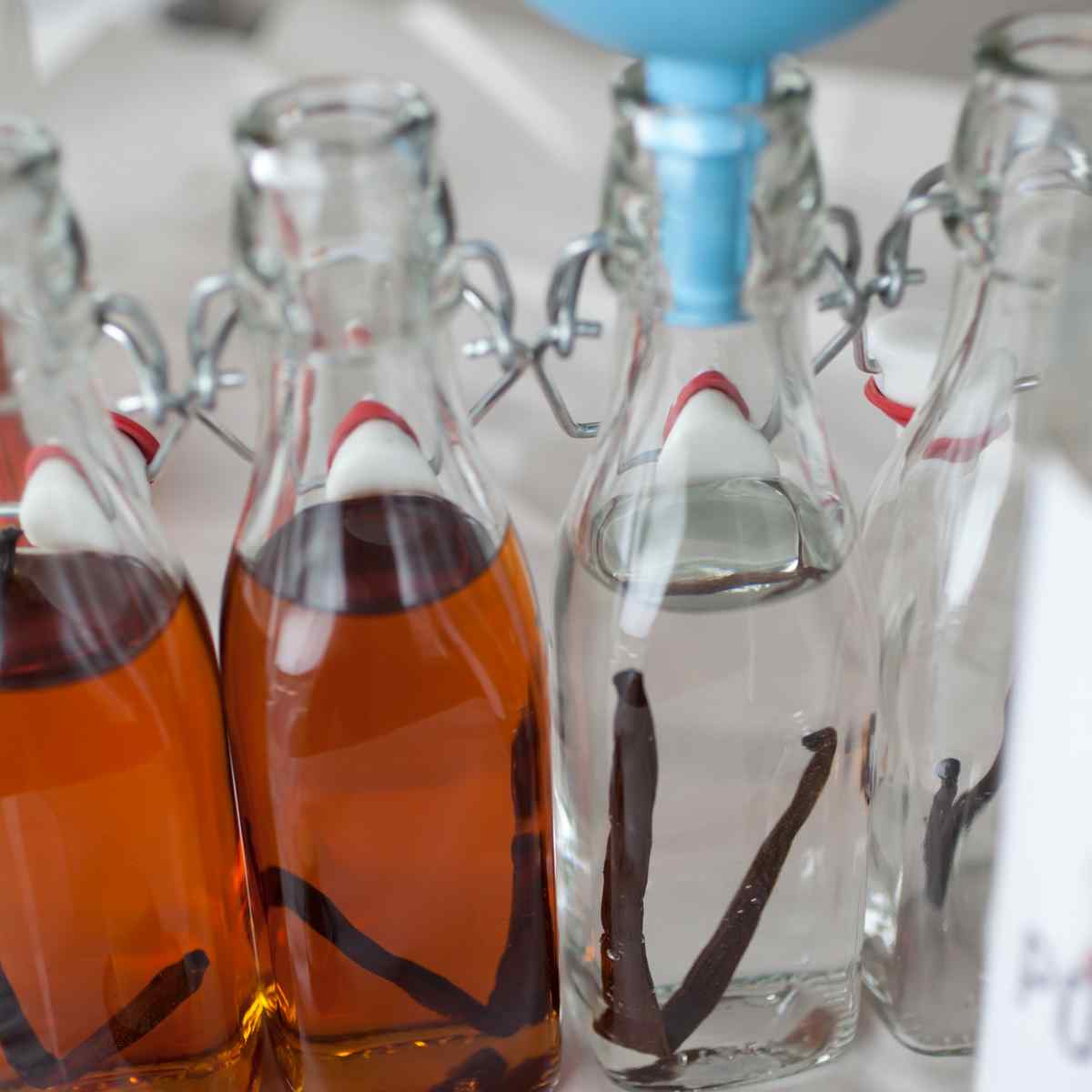
Learning how to make vanilla extract at home is one of the most rewarding things you can do in the kitchen. The process is almost laughably simple: 1 ounce of vanilla beans per 8 ounces of 80-proof vodka, sealed in a glass jar, stored in a dark cabinet for 3 to 6 months. Not willing to wait three to six months? You don’t have to — see our three ways to speed up vanilla extract, from a sous-vide head start to aeration. The rest of this guide covers everything that separates a mediocre result from one that makes store-bought taste thin.
Making extract? Start with extract-grade beans.
Grade B beans have lower moisture and more vanillin per ounce than Grade A, so they extract better and cost less. Madagascar Red Splits, Uganda, Indonesian and Tahitian, in 2 oz to 1 lb bags. Madagascar, Uganda and Indonesian also come in a 13.35 oz bag: exactly one gallon of extract at the FDA standard.
What you need to make vanilla extract at home
Vanilla beans: Use Grade B (extract-grade) beans, not Grade A (gourmet). Extract-grade beans have lower moisture content and higher vanillin concentration — exactly what you want for infusion. They cost less than Grade A, and they perform better for this purpose.
For flavor, Madagascar Bourbon beans are the classic choice: rich, creamy, and familiar. Indonesian Planifolia beans give a similar profile at a slightly lower price. Tahitian beans from Papua New Guinea contribute a more floral, complex note — often used for a blended extract.
Alcohol: 80-proof (40% ABV) vodka is the standard. Rum, bourbon, or brandy also work and add their own character — popular with the artisan extract crowd. Avoid anything below 70-proof; it won’t extract properly and can spoil.
Glass jars: Wide-mouth mason jars with tight lids work perfectly. Make sure they are fully dry before filling.
The ratio
The FDA standard for single-fold pure vanilla extract is 13.35 ounces of beans per gallon of alcohol — about 0.83 ounces per 8 fluid ounces. The common home convention is stronger: 1 ounce of beans per 8 fluid ounces.
We recommend the co-op formula used by our wholesale customers and many professional extract makers:
1 ounce of beans per 8 ounces of alcohol
Use quality beans and the result is noticeably stronger than anything you’ll find at the grocery store.
For double-strength extract: 2 ounces per 8 ounces of alcohol. This is what commercial bakers often use — you use half as much in recipes.
Use our vanilla extract calculator to scale the ratio for any batch size.
Step-by-step instructions
- Prepare your beans. Split each bean lengthwise and cut in half crosswise. You want maximum surface area exposed to the alcohol. Do not scrape out the seeds — the pod contains most of the flavor.
- Add beans to jars. Pack them loosely — you want the alcohol to circulate around them.
- Pour in the alcohol. Make sure the beans are fully submerged.
- Seal and store. Keep in a cool, dark place. A kitchen cabinet works well.
- Shake weekly. Once a week, give the jar a gentle shake to redistribute the vanillin.
- Wait. This is the hard part.
How long does it take?
- 6 weeks minimum — light extract, pale amber color
- 3 months — good extract, dark amber, aroma full and rounded
- 6 months or longer — excellent extract; professional extract makers often run batches 12 months
The extract continues to improve as long as the beans remain submerged. Do not rush it.
How do you know when it’s ready?
- Color: deep amber to dark brown (not pale or golden)
- Aroma: strong, complex vanilla — not sharp or alcohol-forward
- Taste: round, warm, with no harsh alcohol edge
If it still smells strongly of alcohol after 6 weeks, give it more time.
How to store your finished extract
Finished vanilla extract keeps indefinitely at room temperature in a sealed, dark glass bottle. Store away from heat and light. Over time the flavor deepens.
You can top off the jar with fresh alcohol as you use it (add a fresh bean every few batches to keep it going). This is the traditional “perpetual extract” method used by serious home extract makers.
Can you use Grade A beans for extract?
Yes — but it is not the best use of Grade A beans. Gourmet-grade beans have higher moisture content, which means less surface area for infusion and less vanillin per ounce. They are better used split and scraped directly into custards, ice cream, and dough.
If you do use Grade A for extract, increase your bean quantity by about 20%.
Which vanilla beans should you use?
For your first batch, start with Madagascar Extract Grade B beans — classic, reliable, and the flavor most people expect from vanilla extract.
Once you have made a few batches, try blending:
- Tahitian beans from Papua New Guinea blended with Madagascar for a more complex, floral extract
- Uganda beans for a bolder, darker extract with more fudge and chocolate notes
- Indonesia Planifolia as a cost-effective Madagascar substitute with the same flavor profile
View all our extract-grade vanilla beans.
Common questions
Can I use brandy instead of vodka?
Yes. Brandy, rum, and bourbon all work. Each adds its own flavor notes. Bourbon + Madagascar beans is a popular combination for holiday gifts.
Does the alcohol cook off in baking?
Yes. At baking temperatures, the alcohol evaporates. What remains is pure vanilla flavor.
What is the white film sometimes visible on the beans?
That is vanillin crystallizing on the surface of high-quality, well-cured beans. It is a sign of exceptional vanillin content, not spoilage. Scrape it off and add it directly to your batch.
Can I reuse the beans after making extract?
Yes — the beans can be used for a second batch (the second batch will be lighter). After two extractions, the beans are spent. Dry them and use them to make vanilla sugar.
Cassie and Marty have been importing vanilla directly from family farms since 1994. Their extract-grade beans are used by home extract makers, artisan food brands, breweries, and distillers across the United States.
Browse extract-grade vanilla beans →
Learning how to make vanilla extract at home takes three ingredients, one jar, and about five minutes of active work. Not sure where to buy vanilla beans? Our vanilla bean buying guide covers grades, origins, quantities, and what to look for in an online supplier. Learn more about our sourcing and all four SKUs on our Madagascar vanilla beans page.
Ready to start your batch? Visit our Extract-Maker hub for the complete guide — ratios, alcohol selection, which beans to use by origin, and FAQ.