
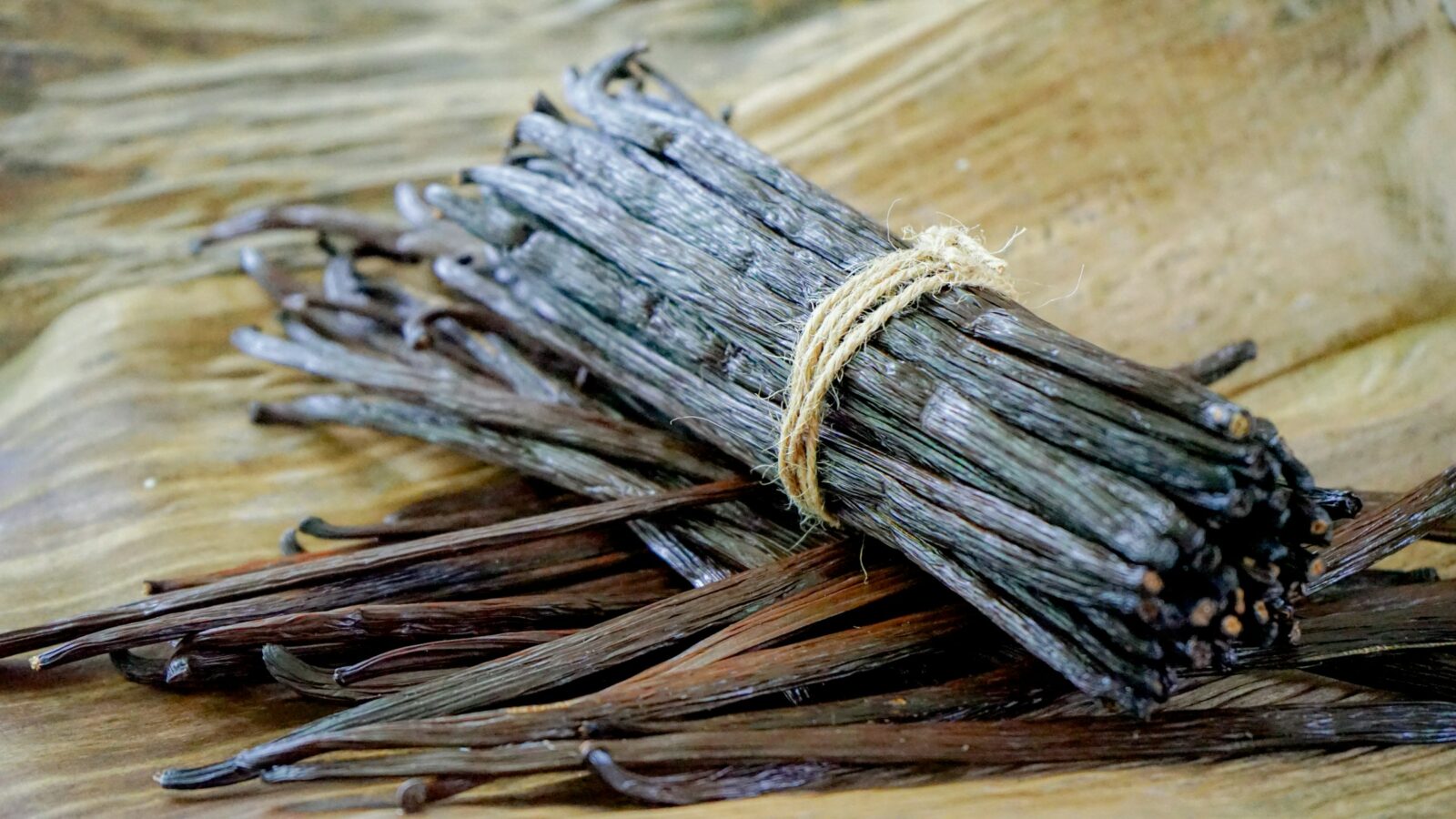
There is no single best vanilla bean — there is the right bean for the job. Madagascar Grade A for classic baking, Uganda or Madagascar Grade B for extract, Tahitian for floral and fruit desserts, Mexican for savory and smoky depth. This guide gives you a direct, use-case-by-use-case answer so you stop guessing and start baking.
Best Vanilla Beans by Use Case
Best for Extract Making: Uganda or Madagascar Grade B
One-line verdict: Uganda Grade B and Madagascar Grade B give you the most vanillin per dollar — exactly what extract making demands.
Extract is a numbers game. You want maximum vanillin content in a bean that fits your budget, because you’re steeping in alcohol for weeks or months. Grade B beans (sometimes called extract-grade) have lower moisture — around 15–20% versus 30–35% for Grade A — which means a higher concentration of dry vanillin-rich material per ounce. Uganda beans from the West Nile and Bundibugyo regions carry a bold, fudgy, dark-chocolate note that holds up beautifully through long infusions. Madagascar Grade B is the other reliable workhorse: classic creamy vanillin, consistent crop after crop. In a hurry? Here’s how to speed up your extract.
If you’re making extract in any real volume, our extract-grade beans are the place to start. Don’t pay Grade A prices for extract — the alcohol doesn’t care about visual perfection.
Best for Baking and Everyday Desserts: Madagascar Grade A
One-line verdict: Madagascar Bourbon Grade A is the standard for a reason — rich, creamy, high-vanillin, and consistent.
Madagascar Bourbon beans from the SAVA region run 16–18 cm, plump, with deep reddish-brown skin and a moist, oily interior. The flavor profile is the one most people picture when they say “vanilla”: sweet, creamy, slightly woody, and long-finishing. That profile works in everything from crème brûlée to pound cake to pastry cream. If you bake a wide range of things and want one bean that reliably does the job, Madagascar Grade A is it. Our gourmet Grade A beans are sourced directly from family co-operatives — the same relationships Amadeus has maintained since 1994.
Best for Floral and Fruit Desserts: Tahitian
One-line verdict: Tahitian vanilla is lower in vanillin but high in heliotropin, which gives it a cherry-almond, floral character unlike any other origin.
Tahitian vanilla beans are shorter and plumper than Madagascar — often 13–15 cm in most of the market, though ours run 17 cm+ — and their flavor reads more like a stone fruit than a creamery. That makes them exceptional in panna cotta, poached pears, fruit tarts, whipped cream, and anything where you want vanilla to add a floral lift rather than anchor the flavor. The tradeoff: they contain less vanillin, so they don’t project the same classic vanilla punch in heavy or spiced batters. Use them where the flavor has room to breathe.
Best for Depth and Savory Applications: Mexican
One-line verdict: Mexican vanilla beans are our most expensive origin, and they earn it — a smoky, spicy, dark-rum complexity that Madagascar doesn’t have — ideal for mole, barbecue, aged spirits, and tobacco-forward desserts.
Mexican vanilla (Vanilla planifolia, the same species as Madagascar, but cured differently and grown in its ancestral home of Veracruz and Oaxaca) has a profile that skews darker: hints of clove, dried fruit, and smoke. It pairs well with chocolate, cinnamon, chili, and anything braised or grilled. It also works beautifully in aged rum or whiskey extracts. The vanilla in a traditional mole negro is Mexican for a reason. For a deeper look at how origin affects flavor, see our full origin comparison guide.
Best Budget Option: Splits and Grade B Beans
One-line verdict: Splits — beans that have split open during curing — are cosmetically imperfect but functionally identical to whole beans for most uses.
Splits are priced lower because they don’t look as pretty in a vanilla sugar jar. But their vanillin content is the same. For extract, ice cream, custard, or any application where the bean gets scraped or steeped, splits are the smart buy. We’re honest about this: if you’re not presenting whole beans at the table, spend less and get more.
Vanilla Bean Comparison at a Glance
| Origin | Grade | Best For | Flavor Profile | Relative Price |
|---|---|---|---|---|
| Madagascar | A (Gourmet) | Baking, desserts | Creamy, sweet, classic | $$ |
| Madagascar | B (Extract) | Extract making | Same profile, less moisture | $ |
| Uganda | B (Extract) | Extract making | Dark chocolate, fudgy | $ |
| Tahitian | A | Floral/fruit desserts | Cherry, almond, floral | $$$ |
| Mexican | A | Savory, spiced, aged extract | Smoky, spicy, dark rum | $$$$ |
| Madagascar | Red Splits | Extract, custard, ice cream | Same as whole, cosmetically imperfect | $ |
Frequently Asked Questions
What are the best vanilla beans for making extract?
Uganda Grade B and Madagascar Grade B. Both are lower-moisture, high-vanillin beans that infuse efficiently in alcohol. The FDA standard for pure vanilla extract is 13.35 oz of beans per gallon of 35% ABV spirit — Grade B beans hit that ratio more economically than Grade A.
What country produces the best vanilla?
It depends on what “best” means to you. Madagascar produces the most consistent, highest-vanillin crop globally and is the industry benchmark. Uganda is gaining ground for extract quality. Tahiti produces the most distinctive flavor. Mexico is vanilla’s place of origin and offers a complexity no other region replicates. We source from all of them — Madagascar, Uganda, Mexico, Indonesia, Comoros, and Tanzania — because no single country wins every application.
Are expensive vanilla beans worth it?
For extract and custard: not always. Grade B splits do the same job at lower cost. For applications where whole, visually beautiful, aromatic beans matter — vanilla sugar, scraped-bean ice cream, a tasting menu dessert — Grade A gourmet beans are worth the price difference. Vanilla is the second most labor-intensive spice in the world after saffron. Every bean is hand-pollinated, hand-harvested, and hand-cured over three to six months. The price reflects that labor, not a markup.
Amadeus has been importing vanilla directly from family farms and co-operatives since 1994. Browse our gourmet Grade A beans or our extract-grade beans to find the right bean for your next project.