
Where Our Beans Come From · Uganda
In Uganda’s high tropics, smallholder farmers grow vanilla among coffee, cocoa, banana, and forest trees. The bean begins in a living, layered landscape.
Follow a vanilla vine into the high tropics of Uganda and you do not arrive at a field planted with a single crop. You enter an agroforest.
Banana leaves spread overhead. Coffee and cocoa occupy their own layers. Forest trees rise through the canopy, and vanilla climbs among them. This is how our sourcing partner in Uganda describes the landscape where its registered smallholder farmers grow vanilla.
The arrangement is practical as well as beautiful. The partner’s farming model places food crops, cash crops, useful insects, and soil cover in the same agricultural system. Each element has a job beyond the vanilla vine.
The growing system
A farm with many purposes
Plantains provide food and support household food security. Coffee, vanilla, and pineapple serve as cash crops. Bees support pollination across the farm. Black soldier flies turn organic waste into nutrient-rich animal feed and fertilizer. Between the larger plants, Arachis pintoi acts as ground cover for weed control, erosion prevention, and soil conservation.
Together, these crops and farm practices create the diverse growing environment shown throughout our partner’s photographs. Vanilla belongs inside that larger system rather than standing apart from it.
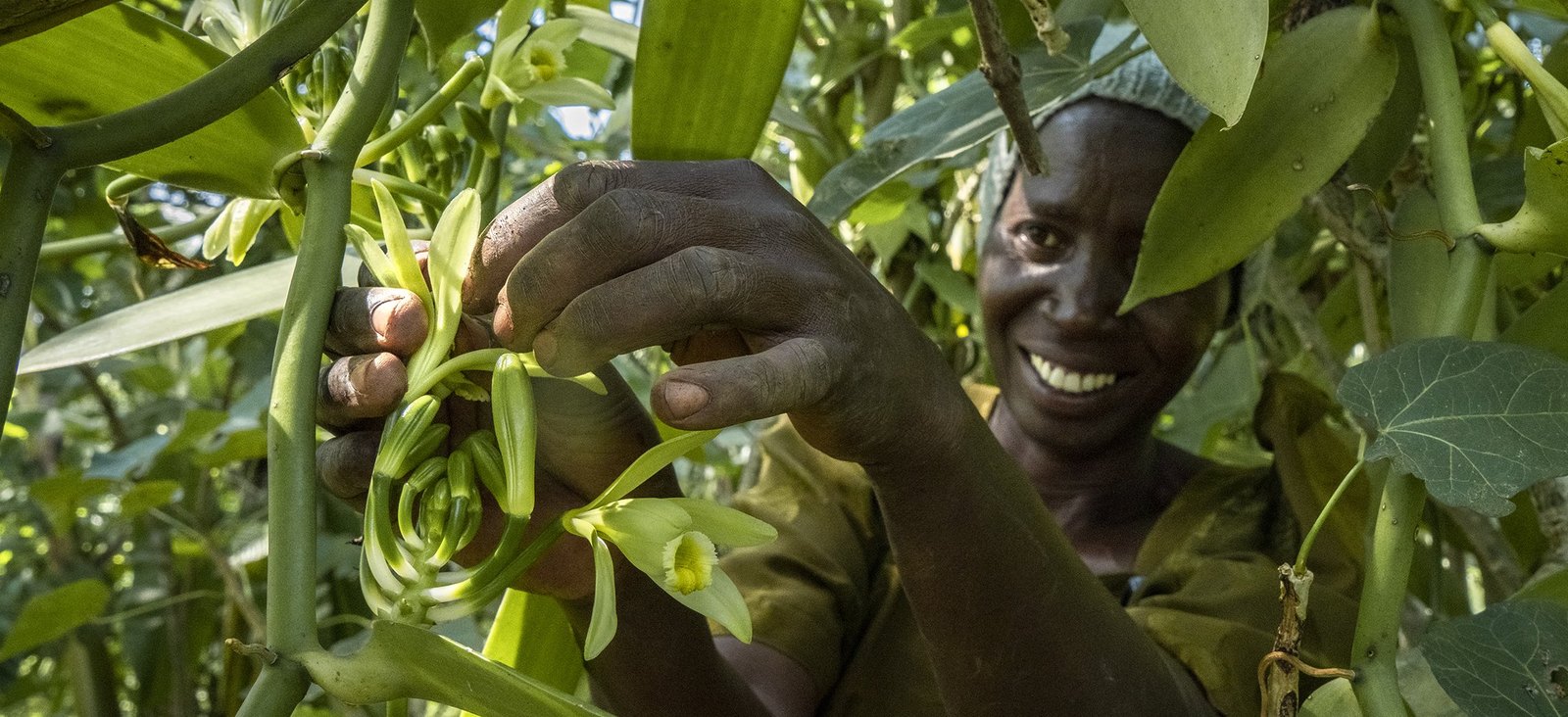
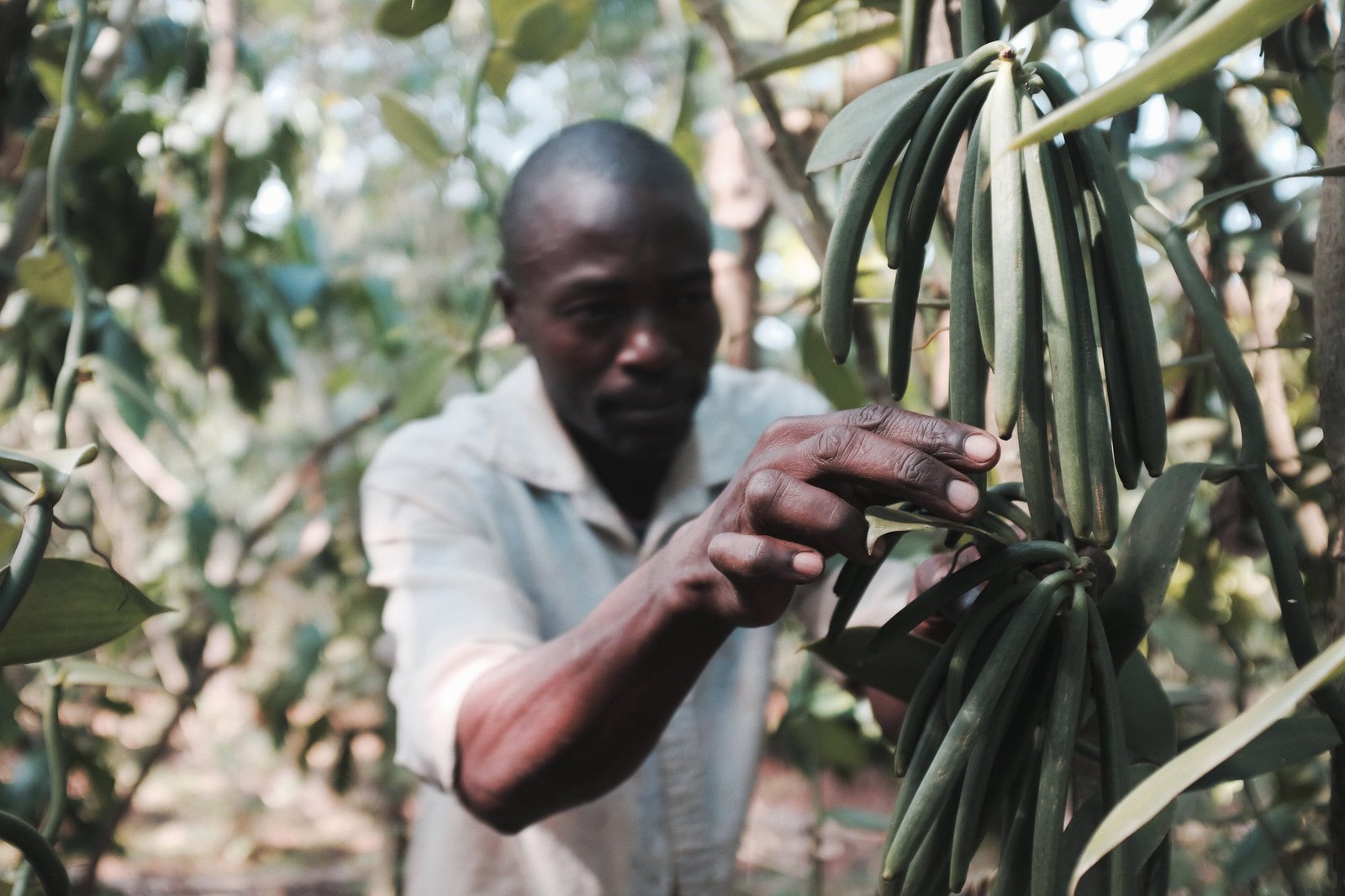
The images bring that scale down to a person and a plant. A farmer stands close enough to inspect a green pod. Hands work among flowers and vines. These are not distant aerial views of anonymous acreage. They show agriculture at human height.
Vanilla grows here as one part of a diverse smallholder farm.
A direct connection
Our partner says its purpose is to create better opportunities for Ugandan smallholder farmers while giving customers a more direct connection to the products they grow. It describes its role in terms of farmer support, fair treatment, farm diversity, food security, and access to markets.
That language matters because vanilla never appears alone in the story. The same farms can include plantains for food, coffee and pineapple for income, bees for broader crop pollination, and low-growing plants that help protect the soil. The vanilla vine is valuable, but the surrounding farm carries the fuller picture.
From green pod to finished bean
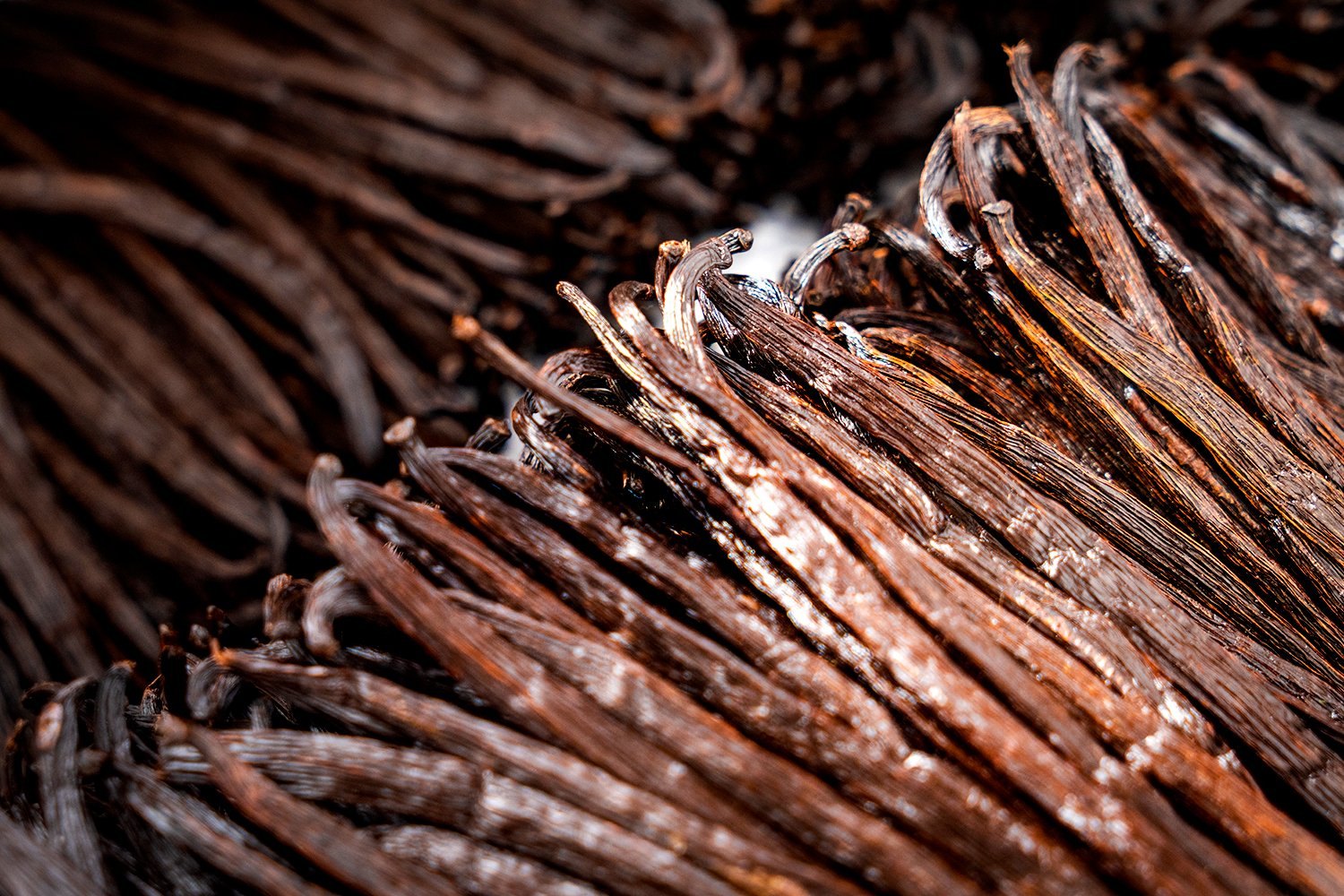
The photographs change as the crop moves forward. Green pods on the vine give way to beans laid outdoors to dry. Later, the finished beans appear dark and gathered into bundles.
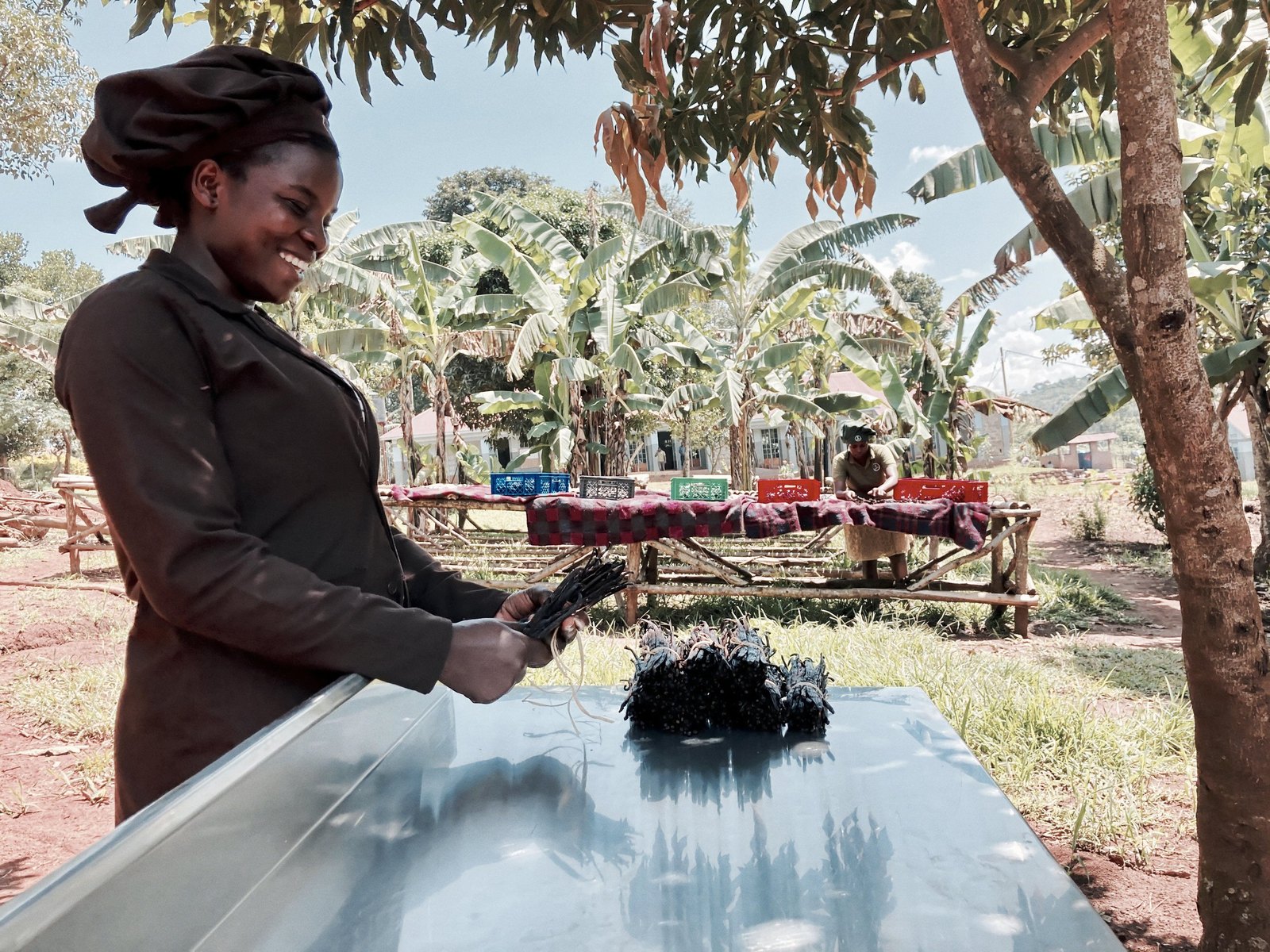
Our partner identifies curing, drying, and storage as the essential post-harvest work used to preserve the beans’ flavor, aroma, and quality. The progression is visible in the images. A fresh agricultural crop becomes the cured vanilla recognized by bakers and extract makers only after this careful handling.
The landscape inside the bean
Origin is more than a country printed beside a product. Here it means high-tropical agroforests, living support trees, and farms designed around several crops. It means smallholders growing vanilla alongside plants that provide food, income, animal feed, pollination, and soil protection.
The finished bundle carries none of that scenery on its surface. It is dark, slender, and quiet. Yet behind it stands an entire farm system: canopy above, ground cover below, and people connecting the two.
Where Our Beans Come From
Ugandan vanilla begins among coffee, cocoa, banana, and forest trees. It leaves the farm only after careful curing, drying, and storage. The result is more than a finished ingredient. It is the final form of a diverse smallholder landscape.
Shop the originUganda Gourmet Vanilla Beans · Uganda Extract-Grade Vanilla Beans · Uganda Vanilla Bean Powder · More about Uganda vanilla
Photography courtesy of our sourcing partner in Uganda, used with permission.