
Standing market report · Updated September 23, 2026 · Next edition: January 2027
Vanilla beans cost less in 2026 than at any point in the past decade. Madagascar Grade A beans that peaked between $500 and $800 per kilogram in 2018 now move at official export minimums of $50, and the trade press puts inflation-adjusted prices in Madagascar and Uganda at historic lows. In the U.S., whole Grade A beans retail for roughly $97 to $225 per pound depending on origin, and extract-grade beans start near $22. We have imported vanilla directly from family farms since 1994. This report covers what beans cost right now, how the market got here, and what we expect next. We update it twice a year.
Vanilla bean prices in September 2026 (U.S. retail)
These are live prices from our own store as of September 23, 2026. Every bean is farm-direct and ships free anywhere in the U.S. Sale prices are marked.
| Product | Entry size | Per pound |
|---|---|---|
| Madagascar Grade A (17 cm+ whole pods) | $39 (¼ lb, on sale) | $97 on sale |
| Madagascar Red Splits, Grade B (extract making) | $28 (2 oz) | $93 on sale, regularly $134 |
| Mexican Grade A, Papantla Veracruz | $25 (1 oz) | $225 |
| Uganda Grade A | $39 (¼ lb) | $117 |
Our Tahitian, Tanzania, Comoros, and Pompona Grade A beans, the Indonesian and Ugandan extract grades, and ground vanilla powders run $22 to $142 depending on origin and size. Current prices for all of them are in the shop.
How prices got here: 2014 to 2026
In 2014, Madagascar Grade A traded between $35 and $65 per kilogram at export. A supply squeeze then sent the market vertical, and by 2018 the same beans commanded $500 to $800 per kilogram, “briefly more expensive than silver by weight,” as the price historians at VanillaRoots put it. Growers worldwide planted into the boom. Vanilla vines take roughly three years to bear, so that new supply matured just as high prices pushed food companies toward substitutes, and the market slid for five straight years.
Two dates matter for where we are now. In April 2023, Madagascar cancelled its $250-per-kilogram minimum export price, and the lowest grades fell below $20 almost immediately. By May 2026, Aust & Hachmann, one of the oldest vanilla trade houses, projected the 2026 Madagascar crop at 3,000 to 3,500 metric tons on top of inventory that has been building for years. Official export minimums still exist on paper, at $50 per kilogram for black vanilla, $25 for long red, and $15 for cuts, but the same report notes they are not always respected. Adjusted for inflation, Madagascar and Uganda prices now sit at historic lows.
What we see from inside the trade
We have bought vanilla through every phase of this cycle since 1994, from family farms and co-operatives in Madagascar, Mexico, Uganda, Indonesia’s Papua region, Comoros, and Tanzania. Three things stand out this year.
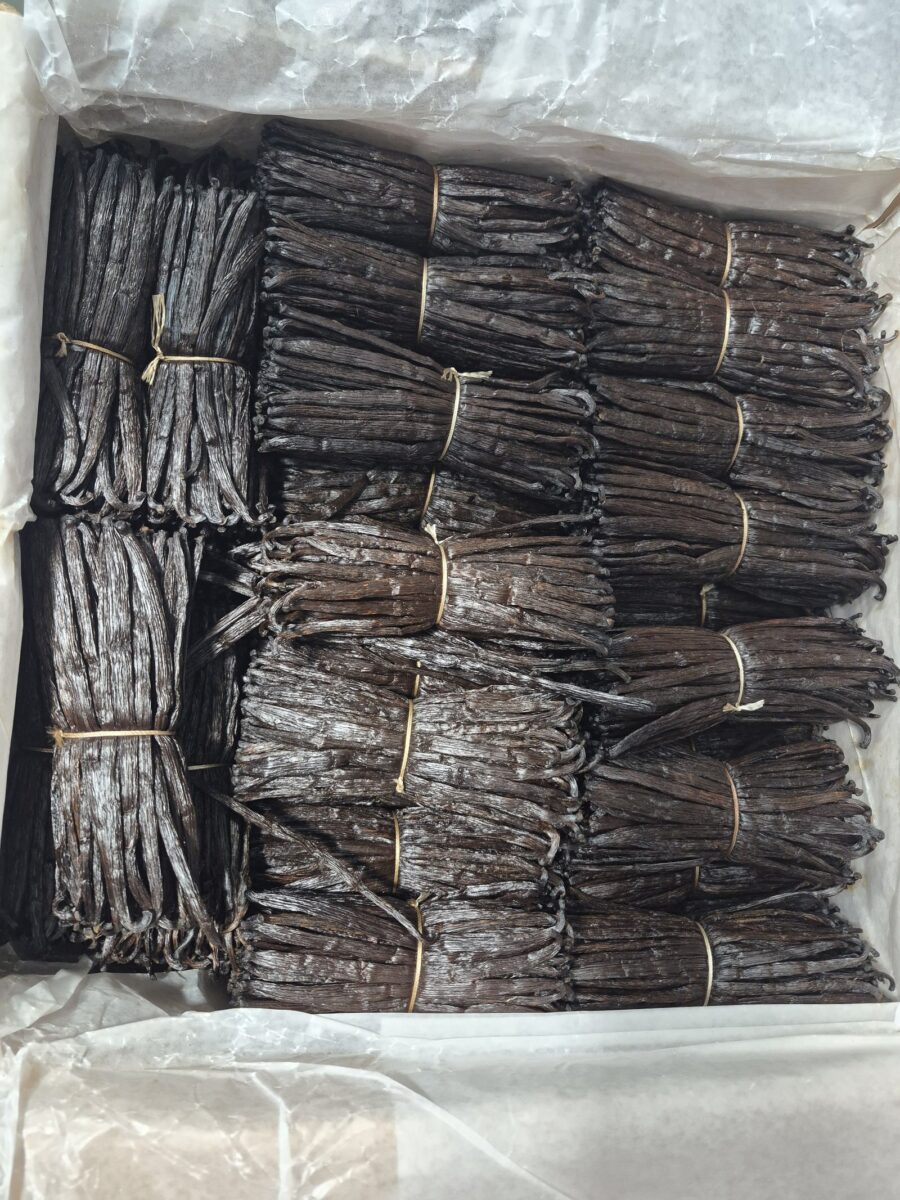
The glut is lopsided. The 2026 Madagascar crop skews heavily toward long, mature Grade 1 beans, while buyer demand favors extract grades. You can read that imbalance in our own price list, where gourmet-length Madagascar Grade A pods sit just $4 a pound above extract-grade splits. If you have ever wanted long, glossy, show-quality beans, this is the year they stop being a splurge.
Glut years test curing discipline. Green vanilla reportedly brought farmers as little as $1.50 per kilogram at the 2025 farm gate. At that price the pressure to rush the months-long curing process is enormous, and moisture and cure are what you taste in a finished bean. Every step of real vanilla production is hand labor, from pollinating each orchid flower to sweating and sunning the beans, and we keep paying for that labor at the same farms we have worked with for years. The cycle sets the price. The curer sets the quality.
Supply is quietly leaving. Aust & Hachmann calls current prices unsustainable over the long term and reports no coordinated plan to relieve the hardship in growing communities. A vine pulled out this year takes roughly three years to replace. Nobody rings a bell at the bottom of a commodity cycle, but this is what one looks like.
Will vanilla prices go back up?
Eventually, yes. The same May 2026 report advises industrial buyers to lock in coverage through 2027 and into 2028. We will not pretend to time the exact bottom. What we can say is that 2026 is the most favorable vanilla buying year since the mid-2010s, and properly stored beans keep for a year or more, so buying ahead carries little risk. Store them airtight at room temperature, and never in the refrigerator.
What this means for you
- Home bakers: this is the year to bake with whole beans instead of rationing them. A quarter pound of Madagascar Grade A runs $39.
- Extract makers: Grade B Red Splits at $93 a pound on sale are the workhorse. Under the FDA single-fold ratio, one pound of beans makes about a gallon of homemade extract; our extract guide walks through the whole process.
- Wholesale buyers: we import 10 kg to 1,000 kg direct, and cycle-low pricing is exactly when volume buyers lock in. Request a wholesale quote.
Vanilla price FAQ
How much do vanilla beans cost in 2026?
At U.S. retail, whole Grade A vanilla beans run about $97 to $225 per pound depending on origin, and extract-grade beans start near $22 for entry sizes. At export, official Madagascar minimums are $50 per kilogram for black vanilla and $15 to $25 for other grades.
Why are vanilla prices so low right now?
Oversupply. Madagascar’s 2026 crop is projected at 3,000 to 3,500 metric tons, inventories have built for years, and the April 2023 removal of the $250 minimum export price let the market find its real level.
Do low prices mean lower quality?
No. Grade, moisture, and cure determine quality, and the market price sets none of them. The real risk in a glut is rushed curing, which is why we buy from the same family farms year after year rather than chasing the lowest lot on offer.
When will vanilla prices rise again?
Nobody knows the date. Aust & Hachmann calls current levels unsustainable and tells industrial buyers to cover through 2028. Vines pulled out now take roughly three years to replace, so when supply and demand cross again the move can be fast. The 2014-to-2018 run took prices up roughly tenfold.
Edition history
- August 2026 (current edition): First edition. Prices at decade lows; Aust & Hachmann projects the 2026 Madagascar crop at 3,000–3,500 metric tons; sale pricing on Madagascar Red Splits noted in the table.
Written by Cassie and Marty, owners of Amadeus Vanilla Beans. We have imported vanilla farm-direct since 1994. First published August 2026; updated twice a year — summer and winter editions. Market data: Aust & Hachmann, May 2026 and VanillaRoots price history. Retail prices are our own live store prices as of September 23, 2026.