
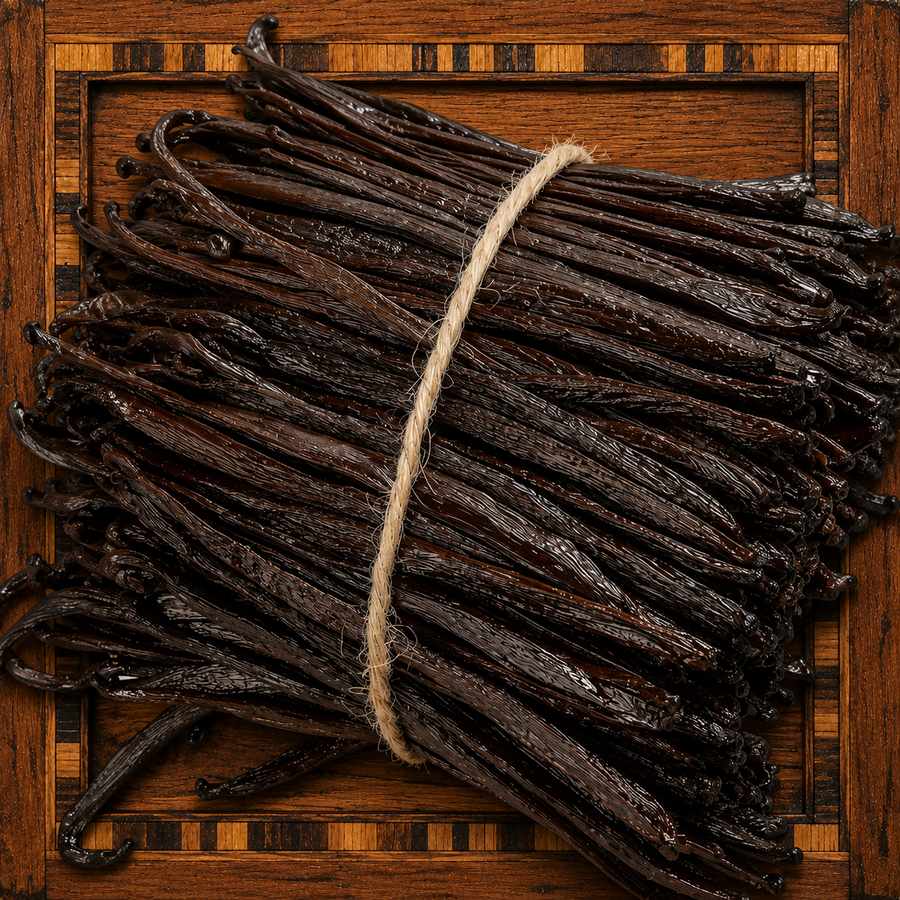
If you’ve shopped for Mexican vanilla beans recently, you’ve probably noticed the price jump. Mexican vanilla beans now routinely sell for $40–$80 per ounce at retail — sometimes more. But why? The answer involves agriculture, economics, climate, and a little vanilla history. For a deeper look at origins, grades, and what to look for when shopping, see our guide on buying vanilla beans.
Mexican Vanilla Has a Complicated Supply Chain
Mexico is the birthplace of vanilla. The Totonac people cultivated vanilla long before Europeans arrived, and Mexico was the world’s dominant supplier for centuries. But today, Mexico produces only a fraction of the world’s vanilla supply — less than 5%.
Mexico’s vanilla growing is centered in the Papantla region of Veracruz. The orchids are still hand-pollinated (they always have been — the native bee that pollinated them doesn’t exist outside Mexico), and labor costs have risen significantly over the past decade. Smaller crop yields from a smaller growing area mean the supply is genuinely limited.
Climate Vulnerability
Vanilla orchids are fragile. A single bad growing season — caused by drought, hurricane, or disease — can wipe out a significant portion of Mexico’s annual crop. In years following weather events in Veracruz, prices spike sharply as buyers compete for limited supply. Unlike Madagascar, Mexico doesn’t have the geographic scale to buffer crop failures across regions. Learn more about our sourcing and all four SKUs on our Madagascar vanilla beans page.
Limited Scale vs. Global Demand
Madagascar produces roughly 80% of the world’s vanilla supply and has the infrastructure for large-scale production. Mexico simply can’t match that volume — which means authentic Mexican vanilla commands a premium from buyers willing to pay for its distinctive character: earthy, woody, slightly spicy, with less of the creamy sweetness you get from Madagascar Bourbon beans.
Is Mexican Vanilla Worth the Price?
Yes — if you’re using it for the right application. Mexican vanilla brings a complexity that’s different from Madagascar. Chefs prize it for:
- Chocolate desserts (the earthy notes complement cocoa beautifully)
- Moles and savory sauces
- Coffee drinks
- Craft cocktails and spirits
- Anything where you want vanilla depth without cloying sweetness
Where to Buy Authentic Mexican Vanilla Beans
Be careful when shopping for Mexican vanilla. Much of what’s sold as “Mexican vanilla extract” in tourist markets or low-cost online stores is made with synthetic vanillin or, worse, contains coumarin (a compound banned in the US as a food additive). Authentic Mexican vanilla beans should be: If you’re making homemade vanilla extract, visit our extract maker guide for bean recommendations and ratios.
- Long, dark brown, and supple — not brittle or dried out
- Clearly labeled as Vanilla planifolia from Veracruz, Mexico
- Sold by a reputable importer with transparent sourcing
At Amadeus, we source Mexican vanilla beans directly from Papantla-region farms in Veracruz. Our Grade A beans are hand-selected, moisture-tested, and shipped the same or next business day. They are currently $225 per pound for Grade A, with free ground shipping on all U.S. orders of 1/4 lb or more. See current pricing and order here.