
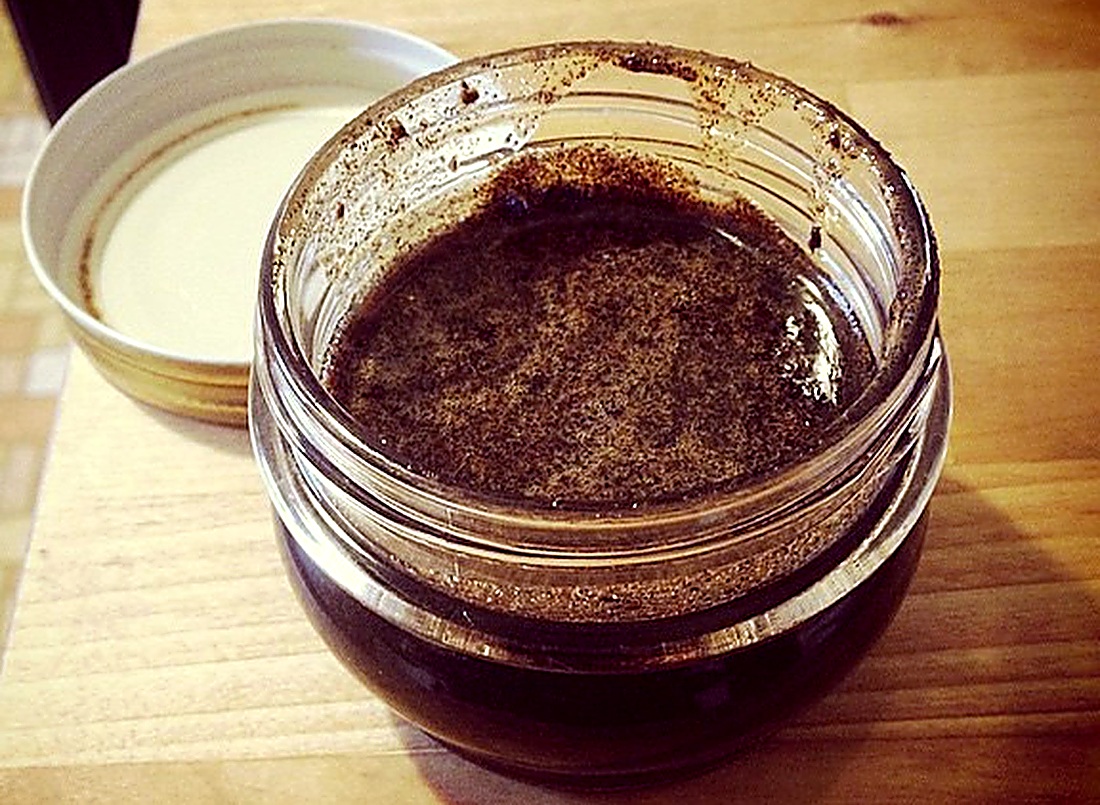
Vanilla bean paste is one of the few pantry staples that is genuinely worth making yourself, and the fastest route to it is not whole beans. It is vanilla powder. Whisk two tablespoons of powder into a base of vegetable glycerin and heavy simple syrup, let it sit a day or two while the powder drinks up the liquid, and you have a thick, speck-flecked paste that substitutes 1:1 for store-bought paste or for extract.
There is one more step most recipes leave out, and it is the difference between paste that is fine and paste that is genuinely good. We will get to it.
Why Start From Powder Instead of Beans
You can make paste from whole pods, and it is a fine method — but it wants a high-speed blender, it makes close to two pounds at a go, and because the beans give up their flavor to alcohol, the finished paste reads sharply of vodka for about two weeks before it settles down.
The powder method needs a bowl and a whisk. It makes about half a cup, which is a realistic amount for a home kitchen to work through, and it needs no alcohol at all unless you want it. The flavor is not a compromise either: vanilla powder is the whole cured pod ground fine, seeds and husk together, and the husk carries a great deal of what you taste. Scraped seeds alone give you the specks but leave most of the pod behind.
What You Need
Makes about ½ cup.
- 2 tablespoons finely ground vanilla powder. This is the flavor. Madagascar powder gives you the classic round buttercream vanilla most people picture; Uganda is bolder and more chocolatey if you want the paste to stand up to coffee or dark chocolate.
- 3 tablespoons food-grade liquid vegetable glycerin. This is what makes it smooth and glossy rather than gritty. It is sold in most pharmacies and in the baking aisle of well-stocked groceries.
- 3 tablespoons heavy simple syrup (two parts sugar to one part water), or agave nectar or light corn syrup. This gives the paste its body and does most of the work of keeping it.
- Optional: 1 teaspoon vodka. It acts as a preservative and helps pull the flavor compounds out of the powder. Leave it out and the paste is completely alcohol-free.
The ground rule behind all of it: powder is fully dehydrated, so it will keep absorbing whatever you give it. You cannot splash a little liquid on it and call it done — a thin base leaves you with grit. The base needs to be thick and sweet from the start.
The Method
- Combine the liquids. Whisk the glycerin, simple syrup and vodka together in a small bowl until completely smooth.
- Add the powder. Sprinkle it in slowly, whisking hard the whole time, until there are no dry clumps left. Dumping it in all at once is how you get lumps you will not whisk out later.
- Let it hydrate. Cover it and leave it at room temperature for 24 to 48 hours. The powder absorbs the base, swells, and thickens into a dark, glossy paste.
- Adjust the thickness. After two days, look at it. Too thick, loosen it with a splash of syrup or glycerin. Too loose, whisk in another pinch of powder.
The Step Most Recipes Leave Out: Let It Bloom
Here is the part you will not find in most versions of this recipe. Hydrating and blooming are two different things, and they run on two different clocks.
Twenty-four to forty-eight hours gets you the texture. After that the paste looks right, spoons right, and is perfectly usable.
The flavor takes considerably longer. Cassie Roblin, our CEO, has made this recipe in her own kitchen, and her note on it is worth repeating: it is good early, but it takes a couple of weeks for the powder to feel fully bloomed into great flavor. What she tells customers who ask is that the flavor turns intense at about one week, and is better still at two.
So use it after two days if you need it. But if you are making paste ahead of a holiday bake or a batch of ice cream, make it two weeks out and let it sit. It costs nothing but patience, and it is a noticeably better product at the far end.
If Something Goes Wrong
- It feels gritty. Almost always under-hydrated. Give it another day before you touch it. If it is still gritty after that, the base was too thin — whisk in a little more glycerin and wait again.
- It is too stiff to spoon. A splash of simple syrup or glycerin, whisked in, fixes it.
- It is runny. A pinch more powder, then give it another few hours to catch up.
- There are dry lumps. They came from adding the powder too fast. Press them against the side of the bowl with the back of a spoon and keep whisking.
Using It, and How Long It Keeps
Substitute it 1:1 anywhere a recipe calls for store-bought vanilla bean paste or for vanilla extract. It shines where the black specks are part of the point — ice cream, cheesecake, panna cotta, buttercream, pastry cream. If you are still deciding whether paste or extract is the right call for a given recipe, we walk through that in our paste vs. extract guide.
Because there is so little water in it and the base is sugar and glycerin, the paste holds a year or more in an airtight glass jar kept cool and dark. The refrigerator is fine too, though it is not required.
Common Questions
Can I make vanilla paste without glycerin?
Glycerin is doing a specific job here — it is what makes the paste smooth and glossy instead of grainy, while the syrup supplies body and keeping quality. We have not tested a glycerin-free version of this recipe, so we are not going to promise you one works. If you would rather skip glycerin altogether, the whole-bean method is the better-tested route.
How much powder does one batch use?
Two tablespoons, which is about 0.6 oz by weight. A quarter-pound bag will make roughly six batches of this size.
Is homemade paste as strong as the store-bought kind?
Use it 1:1 and you will not need to adjust your recipes. If you want it stronger, that is what the fourth step is for — another pinch of powder is the strength dial.
Does it have to be refrigerated?
No. Airtight, cool and dark is enough. Refrigerating it does no harm and may stiffen it slightly; let it come back to room temperature before you spoon it.
We have been importing vanilla since 1994, and we do not sell paste — we sell what goes into it. If you want to make a jar, start with the Madagascar vanilla powder, and give it the full two weeks.